
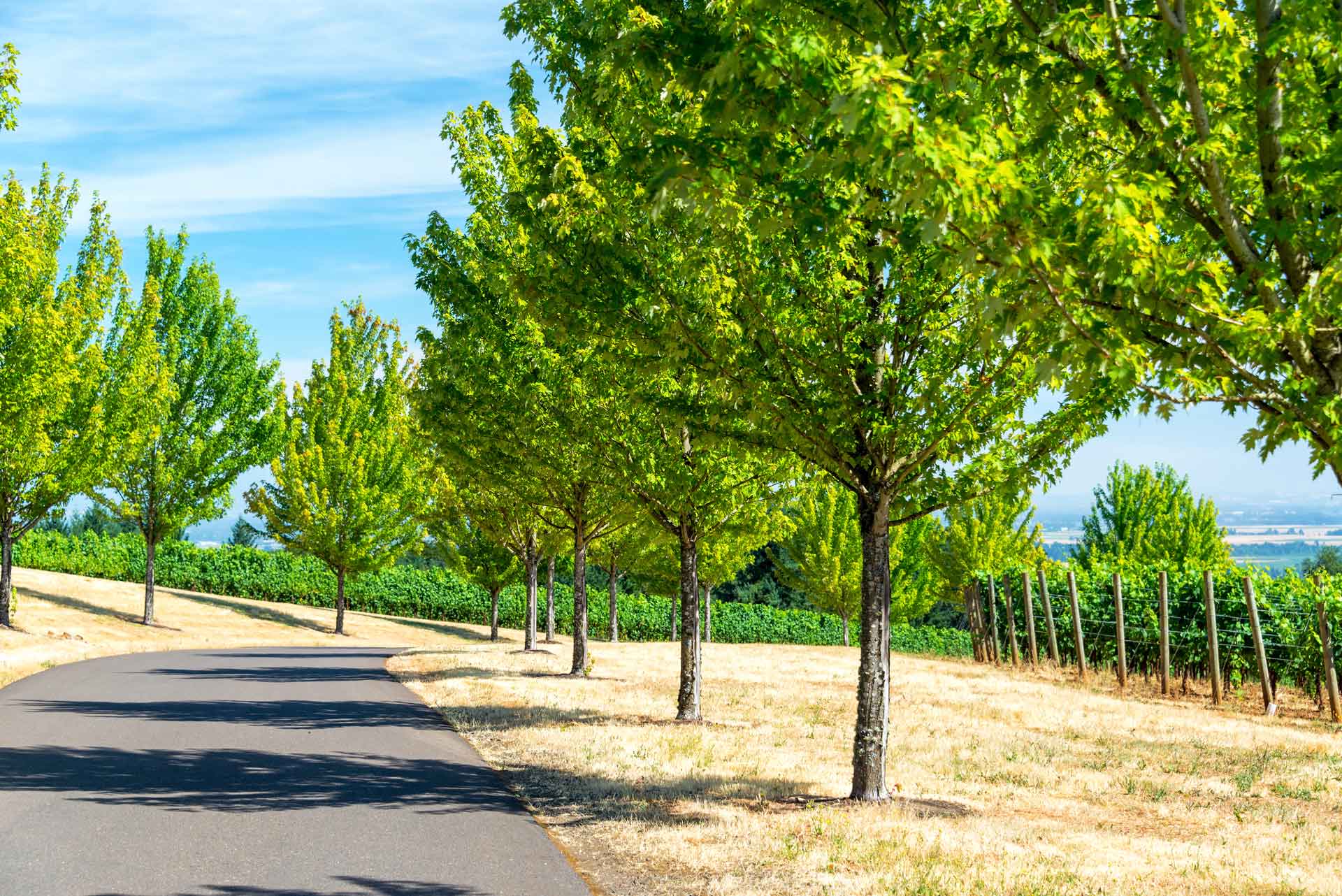
Tree spacing sounds like a small detail, but it has a long list of consequences. Give a tree enough room, and it can develop a strong canopy, stable roots, and a long life with fewer problems. Crowd it into the wrong spot, and you may end up dealing with broken branches, foundation concerns, repeated pruning, and sometimes removal sooner than you ever expected.
For Oregon Coast homeowners and property managers, spacing matters even more. Coastal wind, wet soils, and seasonal storms can amplify the risks of poor placement. The good news is that smart spacing is one of the easiest problem solvers to plan for when you know what to consider.
What Does Tree Spacing Really Mean?
Tree spacing is not just the distance between trunks. It is the amount of “growing room” a tree has over its lifetime, including:
- Canopy space (width at maturity, not current size)
- Root space (roots often spread well beyond the dripline)
- Clearance from structures and utilities
- Airflow and sunlight between trees and shrubs
A small sapling can be deceptive. It may look like it fits perfectly today, but many common landscape trees expand dramatically as they mature. Planning for the mature size is the difference between a tree that thrives and one that becomes a recurring problem.
Why Tree Spacing Protects Your Property
When trees are planted too close to structures or hardscape, conflict is only a matter of time. Common outcomes include:
- Branches rubbing roofs and siding, increasing moisture issues and storm damage risk
- Roots lifting sidewalks, patios, and driveways, creating trip hazards
- Crowded canopies creating excessive shade and dampness that can encourage disease
- Overgrown trees requiring frequent pruning to “fit” the space
Good spacing reduces the need for corrective work later. It also helps you avoid the cycle where a tree is repeatedly cut back, stressed, and eventually removed for safety.
Why Tree Spacing Matters for Tree Health
Trees need room for sunlight, airflow, and a balanced crown. When trees are overcrowded, several things happen:
- Reduced airflow can increase the likelihood of fungal issues
- Shade competition can lead to thin canopies and weak growth
- Crowded branches can cross and rub, creating wounds that invite pests and disease
- Trees may develop lopsided crowns as they reach for light, increasing storm risk
Spacing supports healthier growth and helps trees hold up better during wind events.
How Far Apart Should Trees Be?
There is no single rule because spacing depends on species, mature size, and site conditions. A practical starting point is to space trees based on their mature canopy width.
- Small ornamental trees: often need at least 10–15 feet between trunks
- Medium shade trees: often need 20–30 feet
- Large shade trees and evergreens: often need 30–50 feet or more
If you are planting a row or screen, you can space closer in some cases, but it should be a deliberate plan with a species that tolerates that layout. Tight spacing with a large-growing tree can lead to years of structural issues and constant pruning.
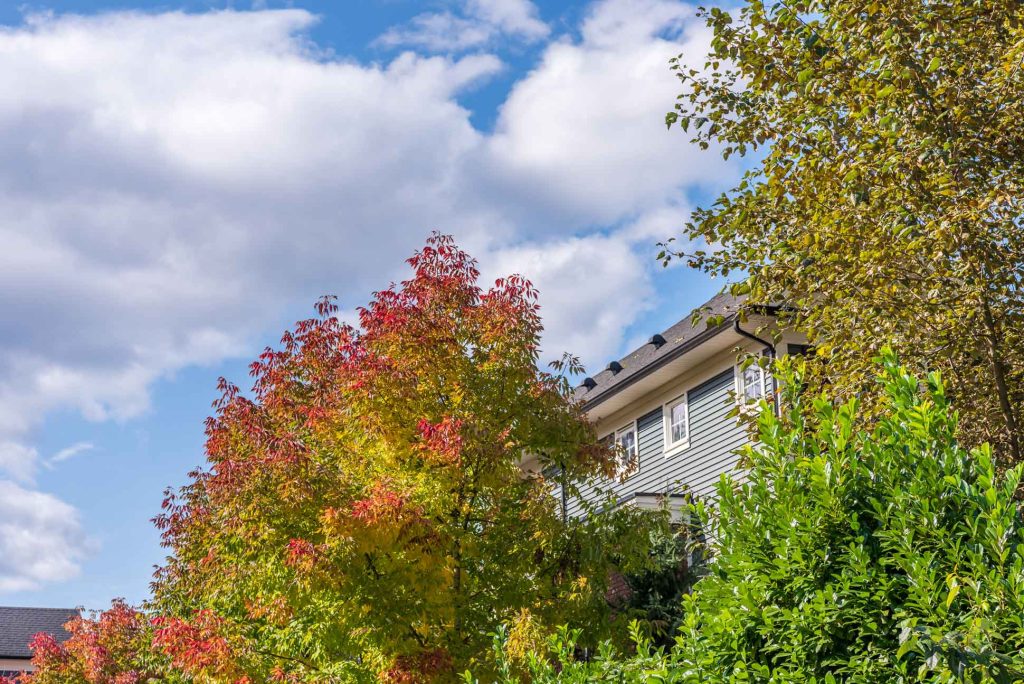
Spacing From Homes, Driveways, Sidewalks, and Utilities
This is where spacing becomes both practical and, potentially, high-stakes. These are common planning targets that help homeowners avoid future damage:
- From a home: plant far enough away that the mature canopy is not hanging over the roofline under normal conditions
- From driveways and sidewalks: allow space for roots and trunk flare to develop without heaving concrete
- From fences and property lines: consider how far branches may extend at maturity, not just the trunk location
- From overhead lines: avoid planting tall-growing species under utilities
- From underground utilities: call before you dig and choose species with mature root space in mind
If a tree is already too close to a structure, the right next step is not always removal. Sometimes strategic pruning, cabling, or health care can reduce risk, but a professional assessment is important so you do not accidentally increase stress or imbalance.
Coastal Considerations for Oregon Coast Properties
Coastal conditions can sometimes turn a mostly fine spacing decision into a risky one. High winds place more force on crowns, and saturated soils can reduce root holding strength. Trees that are crowded may develop narrow, upward crowns as they compete for light, which can create weak branch attachments and increase failure risk in storms.
Spacing that supports balanced crown development, strong branch structure, and healthy roots is part of storm preparedness, even before a storm is in the forecast.
Poor Spacing May Lead to Tree Removal
Sometimes a tree is simply in the wrong place for what it will become. A tree may be a removal candidate when:
- It is too close to a structure and cannot be pruned without creating long-term decline
- Root conflict is already causing significant damage
- The tree has developed structural defects from years of crowding or repeated cutting
- Storm risk is high due to lean, poor branch structure, or compromised roots
A certified arborist assessment helps clarify whether the tree can be managed safely, or whether removal is the responsible option.
Planning Ahead: The Best Time to Fix Spacing Is Before You Plant
If you are adding trees or redesigning a landscape, a simple planning step can save years of trouble:
- Choose the right species for the space, considering mature size
- Map out structures, hardscape, and utilities first
- Consider long-term canopy goals, not just short-term aesthetics
- Plan for access to future tree maintenance, including pruning and storm response
For homeowners who inherited a crowded landscape, the best approach is usually a targeted plan: selective pruning, thoughtful removals where necessary, and plant health care to support the trees worth keeping.
How Arbor Care Tree Specialists Can Help
Tree spacing questions often show up as practical concerns: “Is this tree too close to my house?” “Why are these two trees struggling?” “Should I remove one to save the other?” These are exactly the kinds of decisions that benefit from professional evaluation.
Arbor Care Tree Specialists can help you:
- Assess spacing and risk factors across your property
- Identify which trees can be preserved with pruning and health care
- Recommend removals when spacing creates unavoidable safety hazards
- Build a long-term care plan that protects both your trees and your home
If you are unsure whether a tree’s placement is creating a future problem, a consultation is a smart first step.
Helpful Planting Guidance
If you want a simple, homeowner-friendly planting reference, this is a solid guide: