
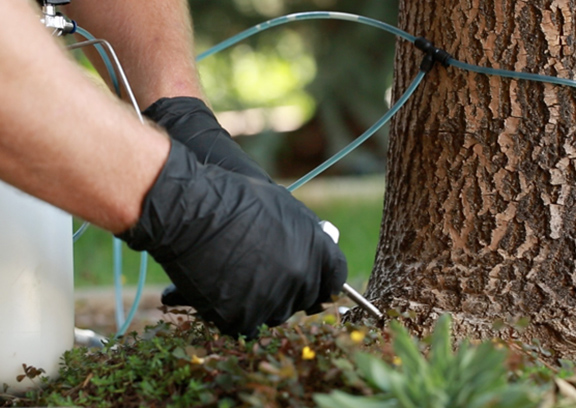
Coastal trees deal with a challenging mix of many factors: wet winters, mild temperatures, ocean influence, compacted soils, and summer stress. Those conditions help keep the landscape green, but they can also create opportunities for diseases. Fungal problems, cankers, root issues, and general decline related to stress are all concerns for property owners on the North Oregon Coast.
Catching tree disease problems early can make a major difference.
Some tree diseases on the coast of Oregon can be managed with pruning, improved soil conditions, and plant health care. Others can weaken a tree to the point that removal becomes the safer (sometimes the only) option.
Why Tree Disease Can Be a Big Issue on The Coast
The coastal climate can put trees under pressure in ways that are easy to miss at first. Long periods of moisture, limited airflow, and saturated soil can all support disease development, especially fungal problems. Trees that are already stressed by poor drainage, compacted soil, or repeated storm exposure tend to be more vulnerable.
That’s one reason prevention is an important approach. A tree that is structurally sound and growing in healthier soil conditions is generally better equipped to tolerate disease pressure than one that is already struggling.
Common North Coast Tree Health Problems to Watch For
On the North Coast, some of the more common concerns include root diseases like Armillaria and Phytophthora, pest problems such as spruce aphid and sequoia pitch moth, and other issues like western pine gall rust, sooty mildew, and bacterial problems such as Pseudomonas. Some of these affect roots, some affect needles or bark, and some appear once a tree is already under duress.
Common warning signs may include:
- Needle loss or thinning in spruce
Spruce aphids can cause thinning crowns and heavy needle loss, especially on Sitka spruce and ornamental spruce along the Oregon coast. - Resin, pitch flow, or branch decline
Pitch-related insect activity, including sequoia pitch moth, may show up as excessive pitch masses or localized damage on trunks and branches. - Galls, swellings, or distorted growth on pines
Western pine gall rust can create swollen galls on branches or stems and weaken the tree over time. - Thinning canopy, poor growth, or decline from the ground up
Root diseases such as Armillaria and Phytophthora may reduce vigor slowly at first, and later lead to dieback, canopy thinning, or structural instability.
Because these issues don’t all behave the same, diagnosis is important. A thinning spruce may need insect related treatment, while a declining pine or broadleaf tree may need root zone evaluation, pruning, plant health care, or even removal if the problem is severe enough.
Cankers, Dieback, and Branch Decline
Cankers are areas of dead bark and underlying tissue that can develop on trunks or branches. Over time, they may contribute to dieback, reduce structural strength, and increase the risk of failure. Trees under stress are often more susceptible.
Warning signs can include:
- Sunken or cracked areas on branches or trunks
- Discolored or dead bark
- Branch dieback that seems to be spreading
- One side of the canopy declining faster than the other
When decline is limited, careful pruning and monitoring may help. When structural integrity is compromised, removal may be the more responsible choice. Learn more from Washington State University .
Root Rot and Decline From Wet Soils
Some of the most serious tree problems begin below ground. In Astoria, wet soils and drainage issues can contribute to root decline, which may not become obvious until the canopy starts thinning or branches begin to die back.
Possible warning signs include:
- Thinning foliage throughout the canopy
- Yellowing leaves or needles
- Poor yearly growth
- Branch dieback without a clear insect cause
- Mushrooms or fungal growth near the base in some cases
Because root-related problems are often advanced by the time visible symptoms appear, prevention is critical. Improving soil conditions and reducing root stress can be just as important as treating what shows up above ground.

Needle Cast and Other Evergreen Problems
Evergreens are a major part of the coastal landscape. Yellowing, browning, and premature needle drop are not always normal shedding. In some cases, these symptoms point to disease pressure or environmental stressors that need to be addressed.
Diagnosis is important in this case. Not every evergreen problem needs the same treatment, and not every declining conifer should be removed. The first step is identifying whether the issue is fungal, environmental, structural, or a combination of several factors.
Arbor Care can help determine the cause of your tree issues:
How to Help Prevent Tree Diseases on The Coast of Oregon
Disease prevention often starts with the basics:
- Prune for airflow and structure
- Avoid unnecessary bark and root damage
- Watch for repeat symptoms from year to year
- Improve soil health instead of reacting only to canopy symptoms
- Evaluate stressed trees before decline becomes advanced
A proactive approach can reduce the likelihood of severe disease and help trees recover more effectively when problems do arise. Having a professional on-site can be crucial in this arena
When to Call Arbor Care Tree Specialists
Not every diseased tree needs to be removed, and not every discolored tree is dealing with disease. That is why a professional evaluation matters. In some cases, pruning or plant health care may be enough to stabilize the tree. In other cases, removal is the safest way to protect the property and surrounding landscape.
If you are seeing recurring leaf spotting, thinning, dieback, or general decline in one or more trees on your property, it is a good time to schedule an assessment.
Contact us today, and keep your trees healthy tomorrow and beyond!