

Leaning trees can seem alarming, but they aren’t all an emergency
Some trees grow with a natural lean for decades and remain structurally sound. Others begin leaning because roots are failing, soil is shifting, decay is spreading, or wind has started pushing the tree out of position.
On the Oregon Coast, from Astoria and Warrenton to Seaside and Cannon Beach, that distinction is important. Storm season brings heavy rain, saturated soil, strong coastal winds, and a higher risk of windthrow. If you are looking at a leaning tree before winter weather arrives, now is the time to ask whether it is stable, declining, or close to failure.
The safest answer usually comes from a professional tree risk assessment. Still, there are warning signs property owners can watch for before a leaning tree becomes a fallen tree.
Why Leaning Trees Deserve Attention Before Storm Season
Coastal trees live with wind. That doesn’t mean they are immune to it. A tree can tolerate years of normal weather and still fail when the wrong combination of rain, wind, and root damage comes together.
Before storm season, a leaning tree should be evaluated if the lean is new, worsening, or paired with other signs of stress. The concern is not just the angle of the trunk. The real concern is what caused the lean and whether the root system can still hold the tree in place.
A tree that leans naturally may have developed reaction wood and root support over time. A tree that suddenly starts leaning after a storm has not had that same time to adapt.
What Is Windthrow?
Windthrow happens when wind pushes a tree over, often by uprooting it rather than snapping the trunk. On the Oregon Coast, windthrow risk can increase when soils are saturated, roots are compromised, or trees are exposed to strong gusts.
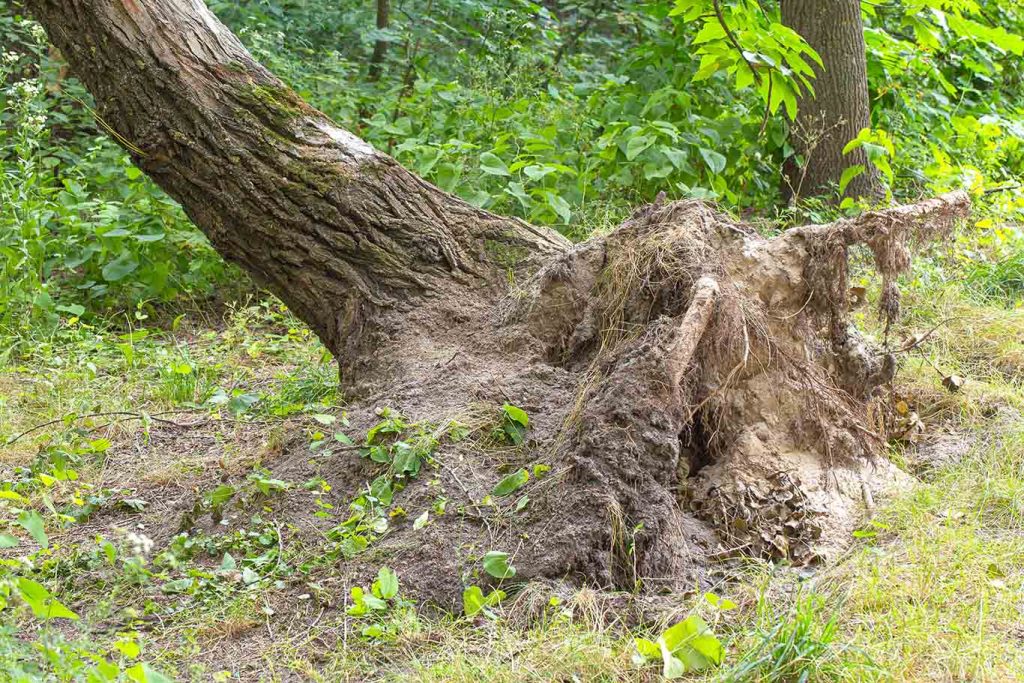
A windthrown tree may lift part of the root plate out of the ground, crack the surrounding soil, or fall completely. In some cases, the tree does not fall right away. It may shift, lean, and remain under tension until another storm finishes the job. That’s why a tree leaning after storm conditions is potentially very hazardous and should not be ignored.
How to Tell if a Tree Is Going to Fall
No homeowner can predict tree failure with certainty from the ground. But several signs can indicate that a leaning tree needs professional attention.
The lean appeared suddenly
A long-standing lean is different from a new one. If a tree that was upright last season is now leaning noticeably, something has changed. Wind, root movement, saturated soil, or structural failure may be involved.
The tree is leaning after a storm
A tree leaning after storm weather should be treated more seriously than a tree with a stable, established lean. Heavy rain and wind can loosen soil, damage roots, and shift the root plate.
Soil is lifting or cracking near the base
Raised soil, new cracks, or a mound forming opposite the direction of lean can point to root plate movement. That’s one of the clearest signs that the tree may be losing its anchor.
Roots are exposed, broken, or decayed
It may go without saying, but roots hold the tree in place. If major roots are damaged, decayed, or exposed by erosion, the tree may no longer have enough support to stay upright during high winds, becoming much more vulnerable to windthrow.
The trunk has cracks, splits, or cavities
A leaning tree with trunk damage is more concerning than a leaning tree with sound wood. Cracks, cavities, seams, and soft areas may indicate structural weakness.
The canopy is thinning or dying back
A thinning canopy can point to stress, root problems, disease, or decline. When canopy decline appears alongside a lean, the tree deserves a professional look.
Oregon Coast Weather Can Make Small Problems Bigger
Storm season is not the reason for every tree problem, but it does often reveal them. A tree with weakened roots may stand through calm weather, then fail when rain saturates the soil and wind adds pressure to the canopy.
The International Society of Arboriculture notes that severe weather can soften soils and overturn trees, and that property owners should take storm-damaged trees seriously.
This is especially relevant in North Coast communities like Astoria, Warrenton, Hammond, Gearhart, and Seaside, where winter storms can bring repeated wind and rain over a short period. A questionable tree may not fail in the first round of storms. It may weaken over multiple events or over the course of several years.
Does a Leaning Tree Always Need to Be Removed?
No. A leaning tree does not automatically need to come down. The right recommendation depends on the tree’s structure, species, health, root condition, location, and risk to nearby targets, among other factors.
In some cases, a leaning tree may only need monitoring. In other cases, selective pruning may reduce limb weight or correct structural issues. Cabling and bracing may help certain trees with weak limbs or compromised branch unions, but it is not a universal fix for a failing root system.
Tree removal may be the responsible choice when the tree is unstable, severely decayed, root-compromised, or leaning toward a home or other important target.
What to Do if a Tree Starts Leaning After a Storm
If you notice a tree leaning after storm weather, do not stand under it, park beneath it, or try to cut it yourself. Storm-damaged trees can be under pressure in ways that are not obvious from the ground.
Keep people and vehicles away
Treat the area under and around the tree as unsafe until it has been evaluated.
Look for ground movement
Cracked soil, lifted roots, or a shifting root plate can indicate that the tree is actively unstable.
Stay away from utility lines
If the tree is touching or threatening power lines, contact the utility company first. Do not approach the tree.
Call for a professional evaluation
A trained professional can determine whether the tree can be stabilized, pruned, monitored, or removed safely.
Why a Professional Tree Risk Assessment Benefits Homeowners
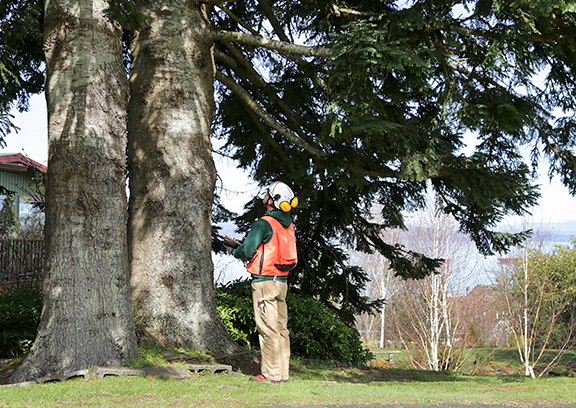
A leaning tree is much more than a tree problem. It is a series of risk questions. What could the tree hit? How likely is failure? What condition are the roots in? Is the lean new or old? Is there decay? Can the risk be reduced without removal?
Those questions are difficult to answer without training and experience. Arbor Care Tree Specialists provides tree consulting, tree risk assessments, hazard evaluations, and tree removal services for property owners in Astoria, Warrenton, Gearhart, Seaside, Cannon Beach, Manzanita, and across the North Oregon Coast and Long Beach Peninsula.
A professional assessment can help you avoid two common bad outcomes: removing a tree that could have been managed, or keeping a tree that is more dangerous than it looks.
Schedule an Assessment Before the Next Big Storm
If you have a leaning tree on your property, the best time to deal with it is before storm season and winter weather puts it to the test. Waiting until a tree falls usually means more damage, more disruption, and fewer options.
Arbor Care Tree Specialists can evaluate the tree, inspect the surrounding site, and recommend the safest options. Whether the answer is monitoring, pruning, support, emergency work, or removal, you will have a clearer plan before the weather turns.