

Sitka spruce trees are one of the defining trees of the Oregon Coast. They tolerate coastal wind, salt, wet winters, and the exposed conditions that many other large trees struggle with. When they are healthy, they are strong, beautiful, and deeply connected to the coastal landscape.
So when Sitka spruce trees begin thinning, browning, or dropping needles, it grabs everyone’s attention.
Across the Oregon Coast, Sitka spruce decline can be caused by several overlapping problems. Sometimes the issue is spruce aphid. Sometimes it is root disease, soil stress, drought, poor drainage, storm exposure, or a combination of these and other factors. The important thing is not to guess. Declining spruce trees need careful evaluation so the right treatment, monitoring plan, or removal decisions can be made.
Sitka Spruce Decline Is Often Multiple Problems
Tree decline is rarely caused by one issue in isolation. A Sitka spruce may be weakened by one stressor, then made worse by another. For example, a tree may be growing in compacted soil, then become more vulnerable to insect pressure. Another tree may lose needles from spruce aphid feeding, then struggle through a hot, dry summer and fail to recover fully.
That is why diagnosis is important. A thinning canopy doesn’t automatically mean a tree is dying, and needle loss doesn’t always mean a pest or disease is responsible. An experienced arborist can look at the full picture, including symptoms in the canopy, soil conditions, root health, site exposure, and recent weather patterns.
Spruce Aphids Are a Major Cause of Needle Loss
One of the most common concerns for coastal Sitka spruce is spruce aphid. These tiny insects feed on spruce needles, especially older needles, which reduces the tree’s ability to photosynthesize and take up water. Over time, the tree may appear thin, off-color, or sparse, especially in the lower and inner crown.

Common spruce aphid symptoms include:
- Needle loss and thinning crowns: Needle loss is often one of the first signs homeowners notice. The tree may look patchy or thinner than it did in previous years.
- Yellowing or browning foliage: Needles damaged by feeding may discolor before dropping.
- Reduced new growth: A tree that has been heavily stressed may not put on strong new growth during the next growing season.
- Small green aphids on the undersides of needles: Spruce aphids are small and easy to miss. They are most active during cooler parts of the year, which means damage may not become obvious until later.
Mild Winters and Dry Summers Can Worsen Spruce Decline
Coastal spruce aphid activity is strongly influenced by weather. Mild winters may allow aphid populations to build, while prolonged cold can help reduce them. When those aphid pressures are followed by hot, dry summers, already-stressed trees may have a harder time recovering.
This is one reason decline may seem to appear suddenly. The tree may have been under stress for months, but the visible symptoms often become most obvious later, when damaged needles drop or the canopy fails to return to its previous fullness.
For homeowners, the lesson is simple: don’t wait until a Sitka spruce looks severely thin before asking for help. Early assessment gives you more options.
Root Disease and Soil Stress Can Also Contribute
Not all Sitka spruce decline starts in the canopy. Some of the most serious problems begin below ground. Root diseases such as Armillaria can attack weakened or stressed trees. Wet soil, poor drainage, root damage, and soil compaction can also limit oxygen and reduce root function.
Possible signs of root or soil-related decline include:
- Thinning throughout the entire canopy: A tree struggling below ground may decline more generally, rather than showing damage in only one branch or one side.
- Poor growth from year to year: If the tree is not putting on normal new growth, root stress or nutrient issues may be part of the problem.
- Fungal growth near the base: Mushrooms or fungal structures near the root flare can be a warning sign, especially when paired with canopy decline.
- Resin flow or visible stress at the base: Some root and lower-trunk problems may show up as resin, wounds, or decay near the base of the tree.
Improving soil and root conditions can help trees that are still viable, but some advanced root problems may create structural concerns. That is why professional evaluation is important.
Needle Diseases, Mites, and Other Pests
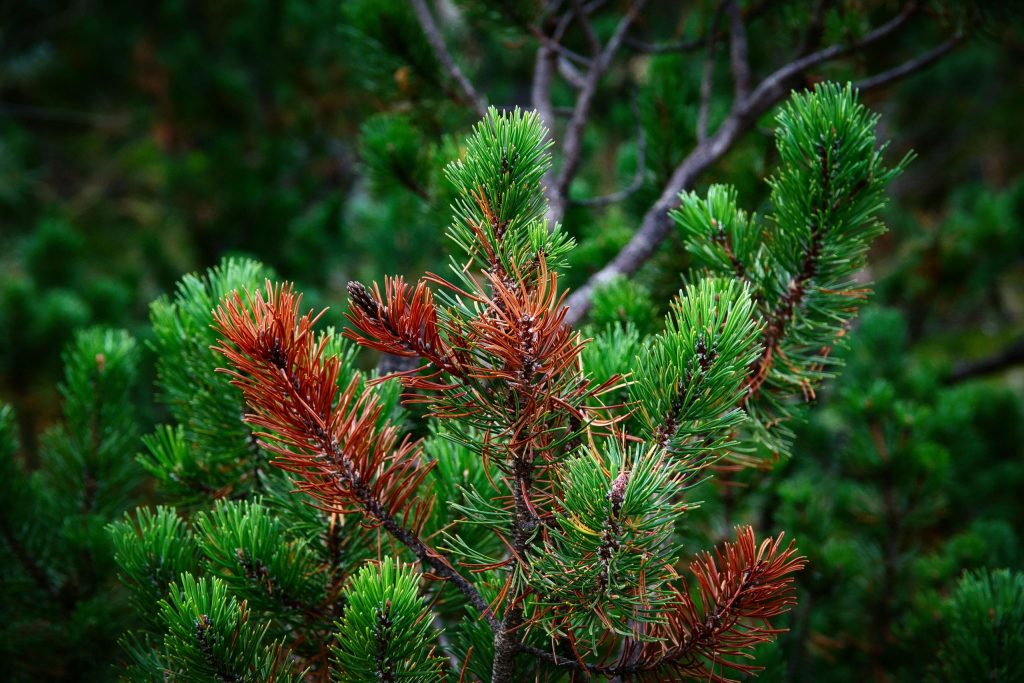
Sitka spruce can also be affected by other pests and diseases, though they do not all cause the same kind of damage. Spruce spider mites, needle diseases, gall-forming insects, fungal issues, and environmental stress can all create symptoms that look similar to the untrained eye.
This is where many homeowners get stuck. Browning needles, thinning branches, and poor growth may look like one problem, but they can come from very different causes. Treating the wrong issue can waste time and allow the tree to keep declining.
- For a helpful regional overview, learn more from Oregon State University Extension here.
Salt, Wind, and Exposure Can Stress Coastal Trees
Sitka spruce is well adapted to the coast, but that does not make it invincible. Winter storms can push salt spray inland, strong winds can damage branches, and exposed sites can dry out faster than sheltered ones. Trees on edges, open lots, roadsides, and developed properties may experience more stress than trees growing in protected stands.
Environmental stress may not kill a tree by itself, but it can reduce vigor and be a major contributing factor. Once a tree is weakened, it may become more vulnerable to aphids, mites, root disease, and other problems.
Should a Declining Sitka Spruce Be Treated or Removed?
That depends on the tree. Some Sitka spruce trees can recover with proper treatment, monitoring, and improved growing conditions. Others may be too far gone, especially if structural roots or the lower trunk have been compromised.
A professional assessment can help determine whether the best course is:
- Spruce aphid treatment
- Plant health care
- Root-zone improvement
- Pruning for safety or structure
- Monitoring over time
- Tree removal when risk is too high
Removal is not always the first answer, but it may be the responsible choice when a tree is severely declining, structurally unsound, or located near homes, roads, utilities, or other targets.
How Arbor Care Tree Specialists Can Help With Sitka Spruce Decline
At Arbor Care Tree Specialists, Sitka spruce decline is treated as a tree health issue first, not a guessing game. Our team can evaluate symptoms, inspect the site, identify likely causes, and recommend the most appropriate next step.
If your Sitka spruce is thinning, dropping needles, showing signs of pests, or declining after recent weather stress, now is the time to schedule an assessment. Acting early can be the difference between protecting a valuable tree and waiting until removal is the only safe option.